Mound Systems
Tank pumping plus pump-chamber, float, alarm, and access checks.
Private-system service across Chittenden County
Tank pumping, mound-system care, alarm diagnosis, inspections, and repairs routed by property address and actual system type.
Call for current scheduling · Describe active backups when you call
The name Burlington is useful geography, but it can hide the first question a homeowner needs answered: is this property on a private wastewater system at all? The city operates municipal wastewater infrastructure for nearly every occupied address. Its own planning document estimated only 82 occupied households using septic systems, based on 2014–2018 household data. That is not a current parcel list, and it is not a reason to guess from a neighborhood name.
The practical pumping market stretches outward through Chittenden County. Charlotte, Jericho, Underhill, and Westford remain strongly dependent on individual onsite systems. Hinesburg, Milton, Colchester, and Richmond combine a public utility area with private systems beyond it. A truck should be dispatched only after the address, municipal service status, road access, and system components are understood.
If a Burlington bill or closing record does not settle the sewer question, City Water Resources can be reached at 802-863-4501. If the property is on septic, call (802) 327-8550 with the tank location, last known service date, and any alarm or backup symptoms. This site routes that request to an independent contractor; the contractor confirms whether the route and work fit.

A septic system is a chain. Good service identifies which link needs routine maintenance and which symptom calls for diagnosis before more work is sold.
Tank pumping plus pump-chamber, float, alarm, and access checks.
Find the failed component before disturbing wet Vermont soil.
Complete solids removal with access, baffle, and filter observations.
A component-by-component condition record, not a guessed certification.
Field observations, document review, and clear limits for buyers and sellers.
Repairable access and outlet problems separated from structural failure.
Triage for backups, high-water alarms, odors, and surfacing waste.
A designer-led DEC permit path for conventional and mound systems.
Diagnosis for mound dosing chambers, floats, alarms, and effluent pumps.
A cautious local planning range with the real quote variables explained.
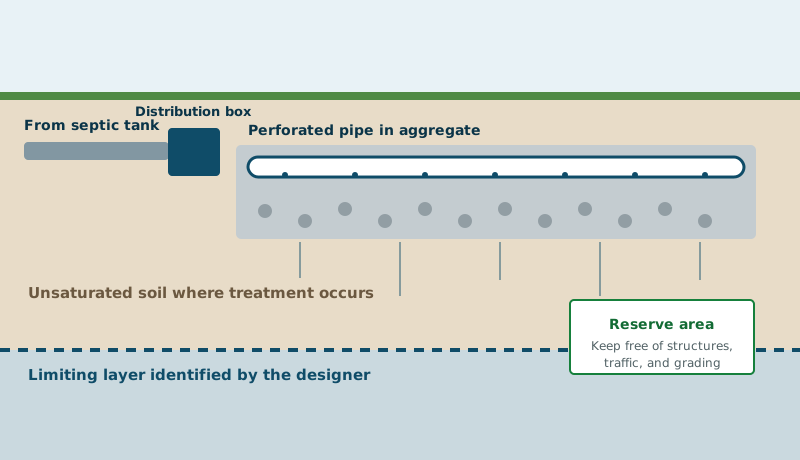
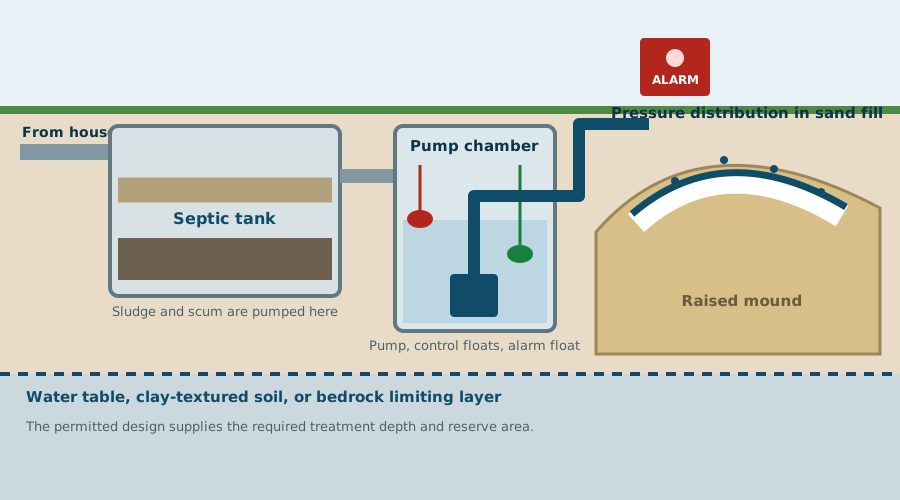
A mound system raises the dispersal surface above limiting soil or bedrock. Under the current Vermont rule, a standard mound design provides 36 inches of vertical separation over an induced water table or clay-textured soil and 48 inches over bedrock. Those are design values, not a diagnosis that can be made by looking at the grass.
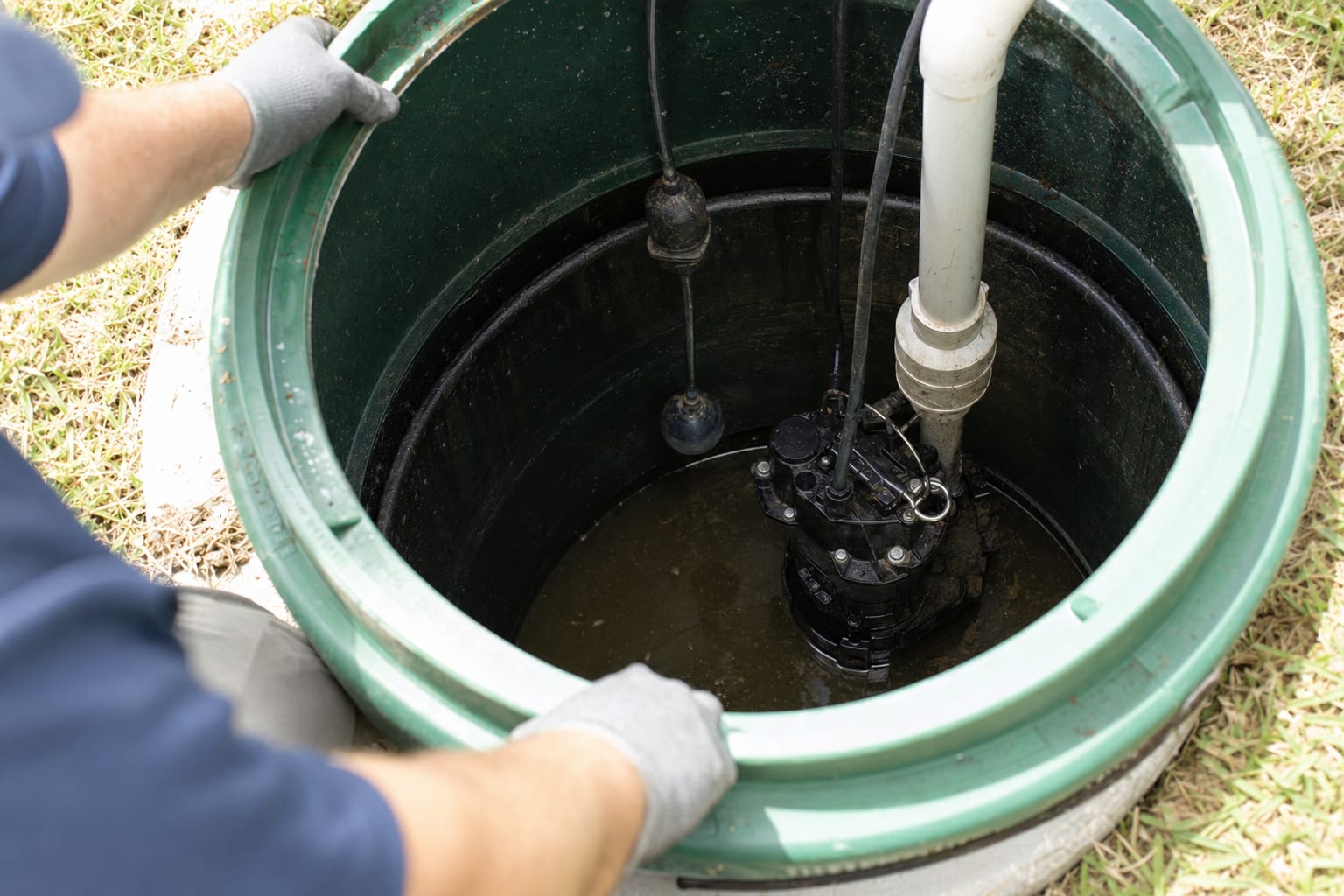
The added elevation usually means the effluent must be dosed under pressure. Floats in a pump chamber tell the pump when to run and activate an alarm if the level moves outside the intended range. A failed float can mimic a failed pump; a blocked line can mimic both. Tank pumping removes accumulated solids, while electrical and hydraulic testing answers the separate alarm question.
Read the Burlington mound-system guide →Share the tank size when known, its last approximate pumping date, where the lid sits, how the truck can reach it, and what the drains are doing.
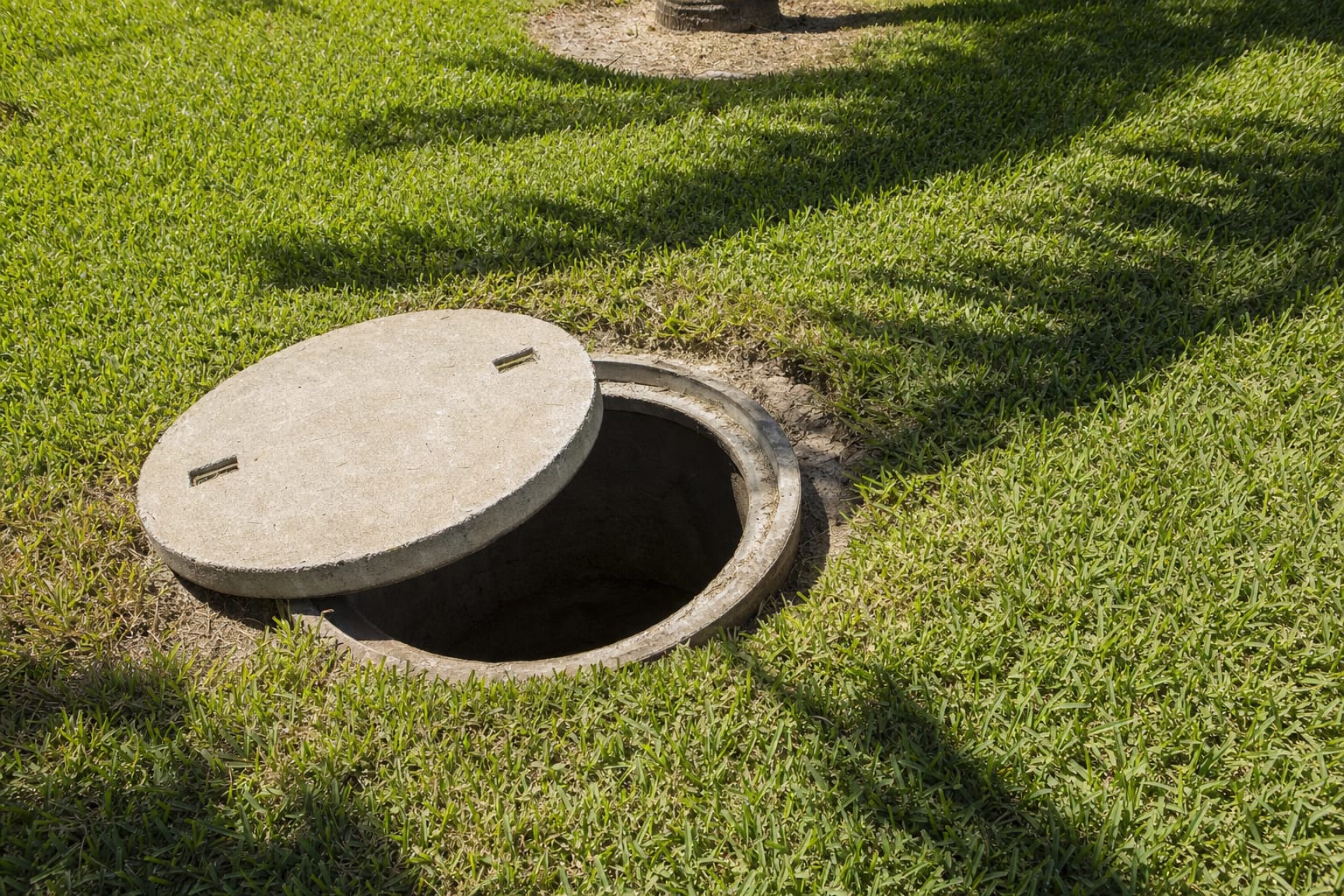
Snow, frozen soil, landscaping, and a buried riser all affect access. Tell the dispatcher whether the lid is visible and whether a truck can stay on a firm drive.
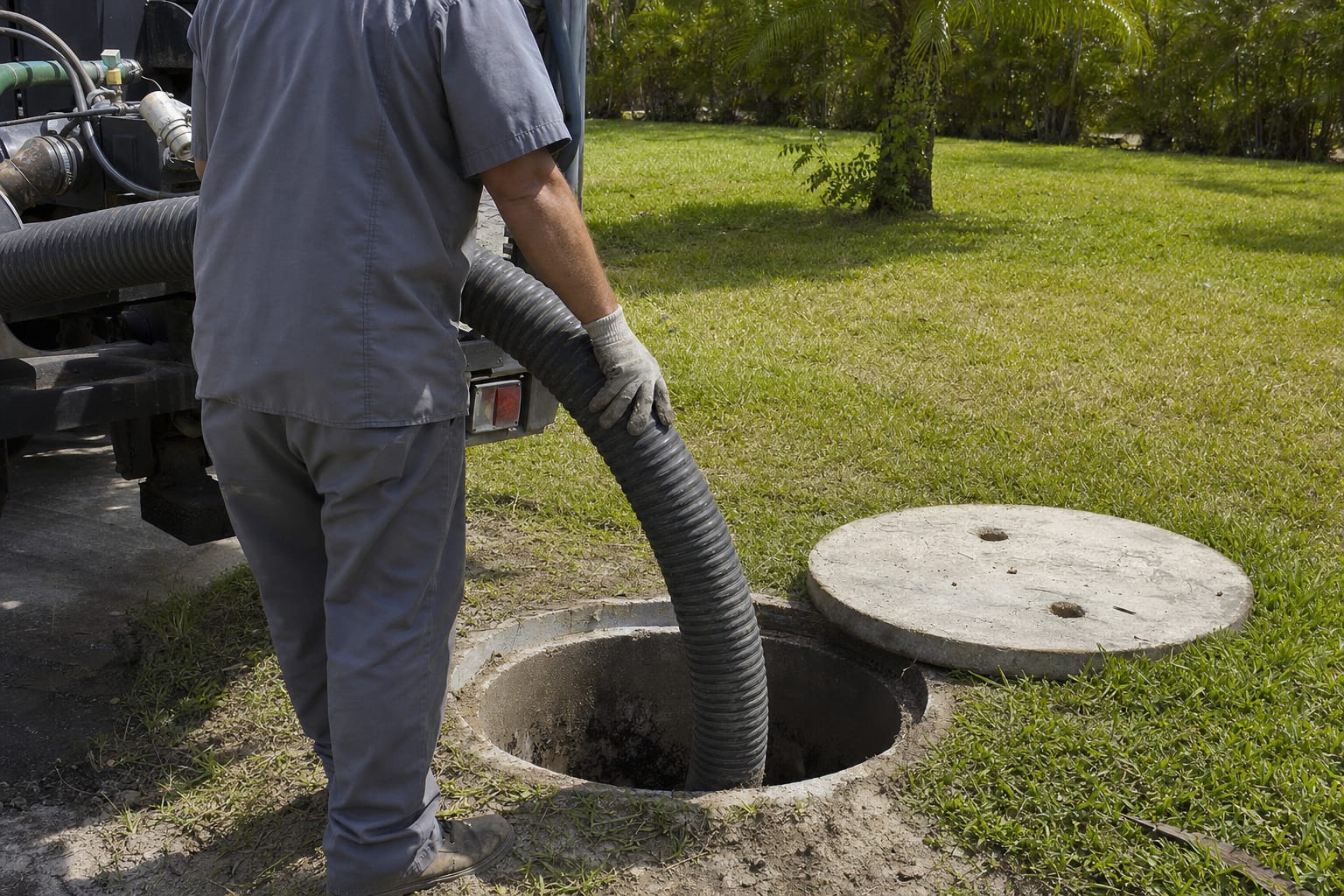
The operator removes settled sludge and floating scum, then transports the load under a Vermont Waste Transportation Permit to a lawful management destination.
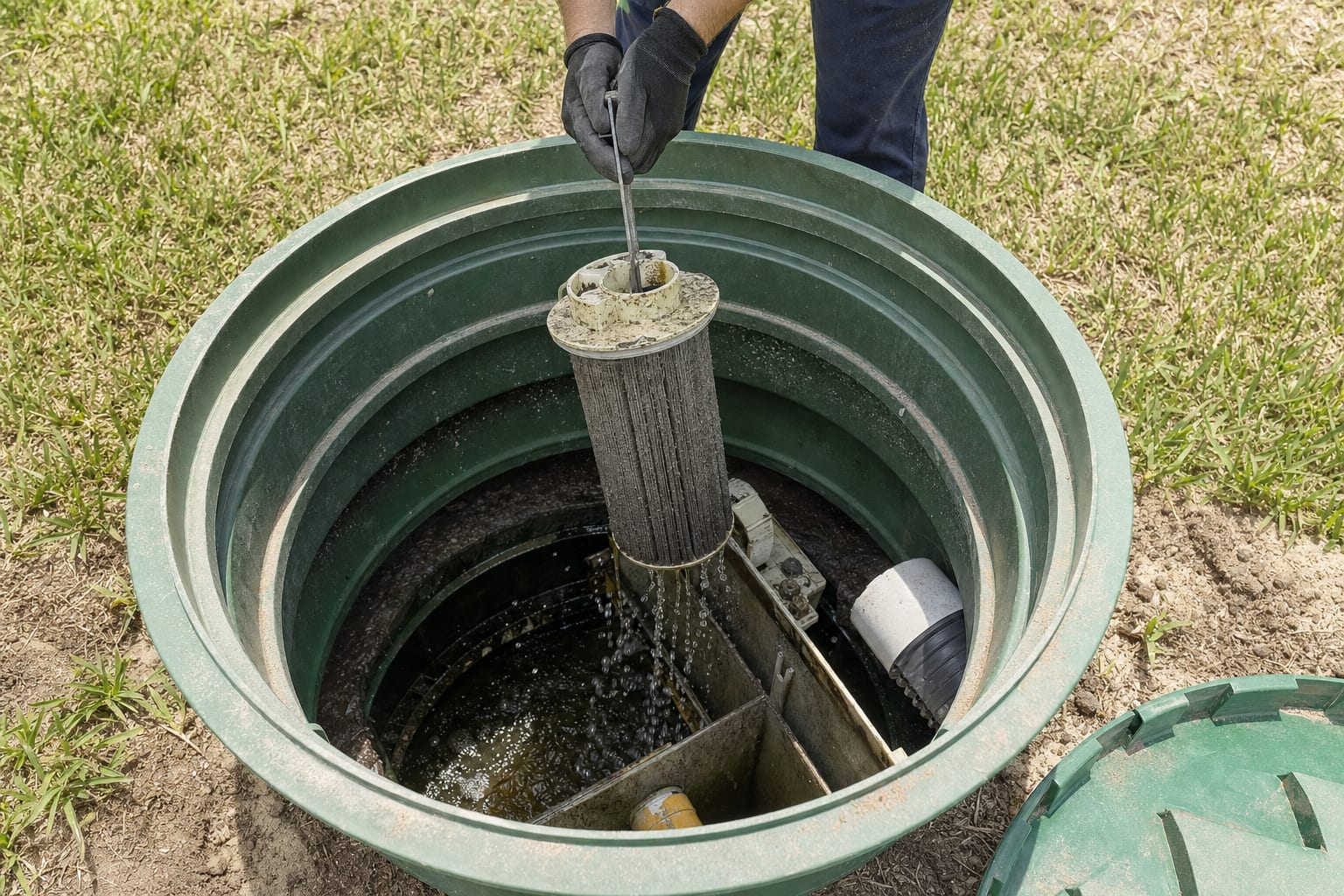
While the tank is empty, the operator can report the filter and baffle condition and suggest an approximate next service date. The operator discusses any extra work with you before beginning it.
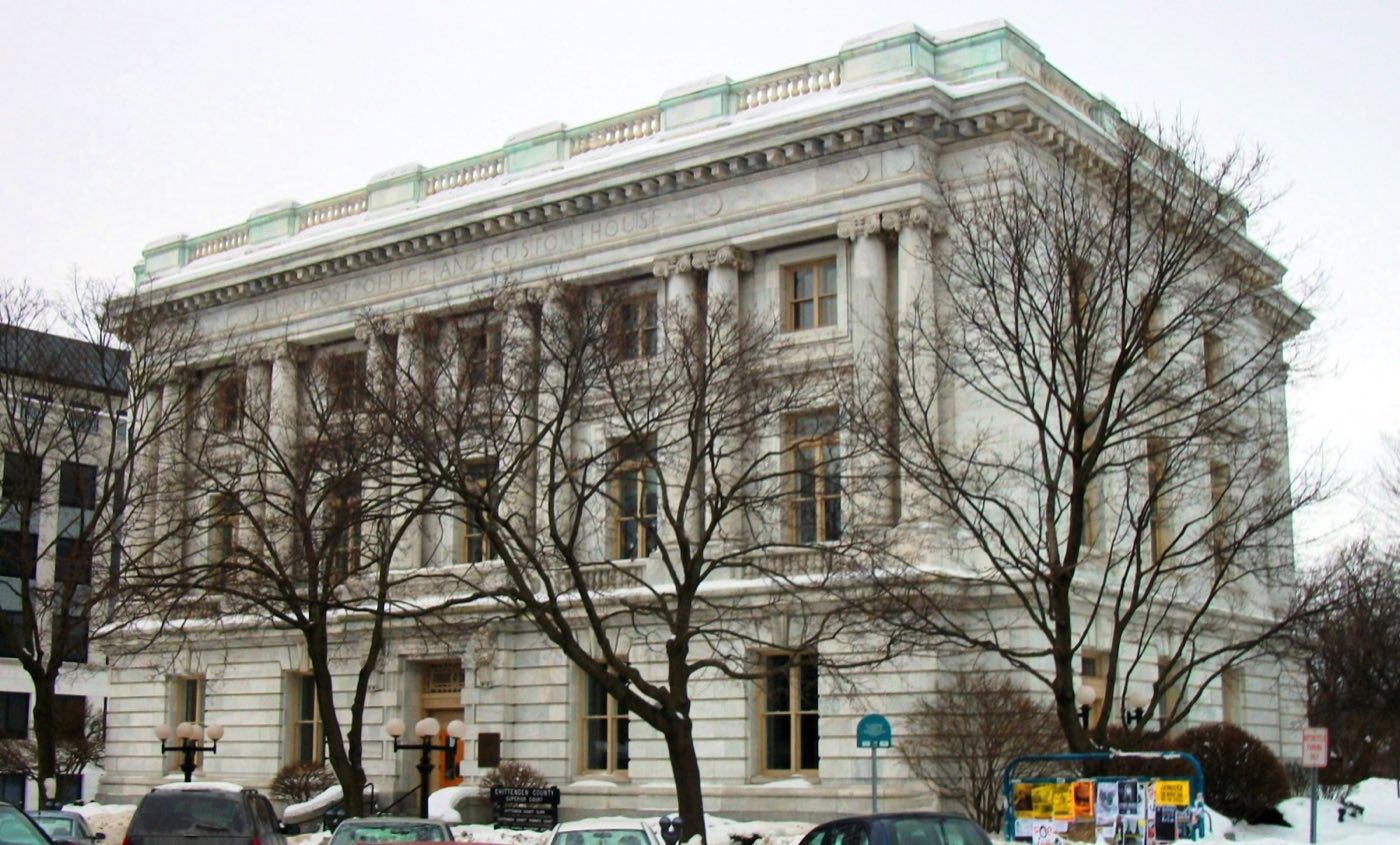
Burlington’s normal annual snowfall is about 80 inches. A lid that is easy to find in September can disappear under a plow bank by February. Long hose pulls, icy grades, and a soft shoulder can keep a heavy vacuum truck away from the tank even when the tank itself is accessible on foot. Marking risers before winter and keeping the driveway load-bearing save time without putting the lawn at risk.
Spring brings a different constraint. Melting snow and rain can raise shallow groundwater, slow the soil treatment area, and send runoff toward low access lids. Pumping may relieve a full tank, but a tank that refills from groundwater or a saturated field needs diagnosis. Do not open or enter a tank, and do not divert a sump pump toward the septic system.
The city core is overwhelmingly sewered. Most private-system calls come from rural and edge communities around Chittenden County.
Most homes inside the city connect to municipal wastewater. If a bill or property record does not make the answer clear, call Burlington Water Resources before ordering septic work.
New North End · Old North End · South End · Hill Section · Lakeside · Appletree Point · Five Sisters · Ethan Allen Park
Residential ZIPs 05401 · 05408
Vermont sets no single pumping interval for every household. Section 1-908 of the 2023 state rules requires pumping before sludge and scum can leave the tank and requires filter cleaning before solids clog it. Tank measurements, occupancy, capacity, and permit conditions set the practical schedule.
Vermont permits more than one lawful management route. Septage must travel under a Vermont waste-transporter permit to an authorized wastewater receiving facility or be managed through an ANR-certified residuals program. A contractor should be able to identify the route used for the load.
A pumping visit does not approve a design or certify permit compliance. Vermont permit plans are prepared by a designer, and DEC or a currently delegated municipality handles the permit decision.
No. Burlington’s long-term control plan calculated only about 82 occupied households on septic from 2014–2018 data. Most city addresses use municipal wastewater. The private-system service area is primarily in the surrounding towns, so the property address is the first fact to confirm.
Vermont does not assign one interval to every home. The state rule requires pumping before sludge and scum can leave the tank and filter cleaning before solids clog it. Household size, tank capacity, measurements, food-waste habits, and system design determine the practical schedule.
The primary tank is pumped in much the same way, but the visit should account for the dosing chamber, floats, alarm, and pressure distribution. The pump chamber is not automatically emptied during every routine visit. Its level and condition determine what should happen next.
Silence the audible alarm if the panel allows it, reduce water use, and do not reset breakers repeatedly. A high-water alarm can point to excess inflow, a stuck float, a failed pump, lost power, or resistance downstream. The alarm reports a condition, not the cause.
Vermont DEC administers the statewide wastewater rules. Chittenden County questions go to the DEC Essex Regional Office at 802-879-5656, unless the municipality currently has delegated authority for that filing. A designer prepares the plans for construction, replacement, or a failed-system permit.
Pumping can stop solids from leaving the tank and can create room for diagnosis, but it does not restore soil that no longer accepts effluent. If the liquid level rises again quickly without heavy household use, the outlet, pump, distribution parts, groundwater, and treatment area need to be evaluated.
Have the address, last known pump date, lid location, and any alarm or backup details ready. The contractor confirms availability and scope by phone.